01What actually changes on the gas bill
A gas tank water heater burns fuel on a schedule set by a thermostat, not by your habits. It reheats a full tank of water every time it drifts a few degrees below its setpoint, whether anyone showers that day or not. A tankless unit only fires when a fixture calls for hot water, and it stops the moment you shut the tap off. For an average Sacramento household of three or four people, that difference in firing pattern typically shows up as a noticeably lower gas line item, though the exact percentage depends on your household's actual habits more than any single published figure.
Where the difference is largest is in homes that run hot water in short, frequent bursts: dishes, hand washing, a load of laundry. That is exactly the pattern where a tank is reheating constantly and a tankless unit barely fires. Where the difference narrows is in homes that run one long, continuous draw, like a soaking tub, since a well-sized tankless unit is efficient there too, but a tank isn't losing as much to standby heat relative to that one big draw.
Household size matters more than most people expect. A family of five running showers before school and dishes after dinner sees a very different bill impact than a retired couple who showers once a day and rarely runs the dishwasher. We ask about these patterns before recommending anything, because the honest comparison depends on how the house actually behaves, not on a household of some average size that may not resemble yours.
02Standby loss: the cost a tank bill hides
Every tank, no matter how well insulated, loses heat through its jacket, its flue, and its fittings around the clock. That loss is called standby loss, and it is baked into every tank water heater's energy bill whether the household is home, asleep, or on vacation. It does not show up as a line item anywhere. It just shows up as gas usage that never quite goes to zero, even in a week nobody showers at home.
Tankless has no equivalent. There is no reservoir of hot water sitting idle, so there is nothing losing heat between uses. This is the single biggest structural reason tankless tends to run cheaper over a year, independent of how efficient either unit's burner is on paper.
Tank age changes the picture too. A tank's insulation jacket degrades slowly, and a unit near the end of its rated life often loses more heat to standby than it did when new, which means the true cost of keeping an aging tank running can be higher than its nameplate efficiency suggests. That is worth factoring in if your current tank is already past ten years old, since the honest comparison is tankless against your tank's current performance, not its performance when it was installed.
03The upfront cost difference, and the real payback period
A gas tank replacement generally costs less than half of what a tankless installation runs in this area. What moves the installed cost of a tankless here is gas line sizing, the vent run, condensate drainage, permit fees, and whether a wall has to be opened to route everything cleanly. A tank replacement, by comparison, is usually a same-day swap with far less to touch.
That upfront gap is why payback matters more than a monthly savings figure by itself. Once you weigh the higher installed cost of tankless against a realistic monthly gas savings, most Sacramento households land on a payback period of eight to fourteen years. That is longer than some marketing suggests, and it is also shorter than the eighteen to twenty year service life a well-maintained tankless unit can deliver, which means the unit typically pays for its own price premium and then some, provided it is sized and maintained properly.
The workmanship on the installation carries a one-year warranty, and the unit itself carries a manufacturer warranty of five to fifteen years depending on the model chosen. That warranty length is part of the honest math too: a unit that fails at year six under a ten-year warranty is a very different financial outcome than one that fails at year six with no coverage left, and it's worth asking any installer exactly what warranty comes with the specific unit they're quoting, not just the brand name.
Get a comparison built around your actual setup
We'll walk your gas line, your vent options, and your household's real usage before we recommend either one.
Book an Appointment04Where a tank is still the right call
Tankless is not universally the better option, and we say so plainly when it isn't. A single occupant or a couple with light hot water use may never generate enough savings to close that eight to fourteen year payback gap before the unit's own service life runs out. A home with an undersized gas meter or a vent run that would require significant new penetration through masonry or a finished ceiling can turn a straightforward tank swap into a much larger project than the savings justify.
Budget matters too. If the household is on a tight timeline for a working water heater and the cash difference between the two options is the deciding factor, a tank replacement gets hot water back the same day at a lower cost, and that is a legitimate reason to choose it.
Ownership horizon is another honest factor. If you're planning to sell within the next few years, the eight to fourteen year payback period may not complete before you move, which shifts the decision toward whichever option is cheaper up front or has better resale appeal in this market, rather than whichever runs cheaper to operate over a decade you won't be living through.
05What Sacramento's water adds to the math
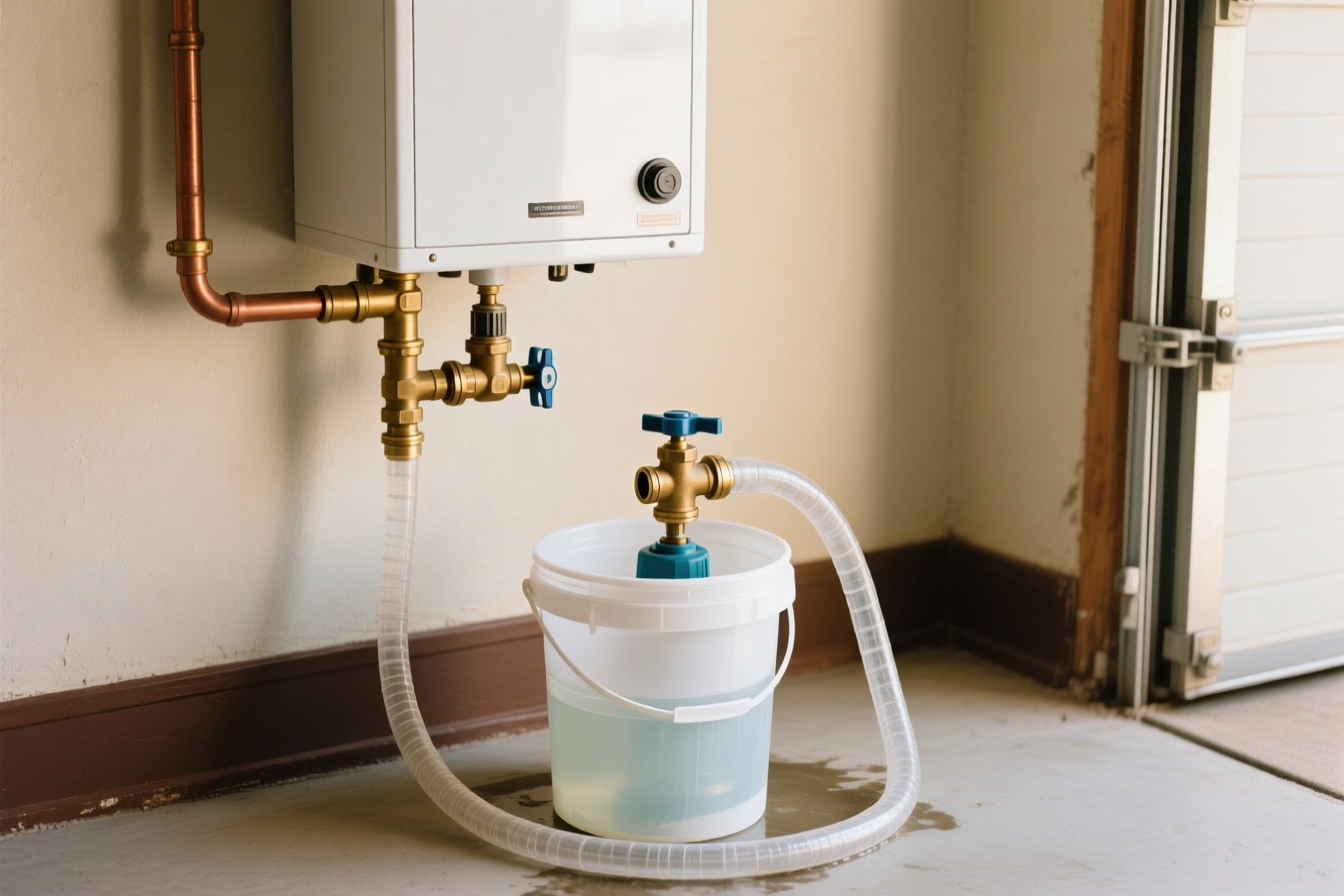
Every water heater in this region deals with harder water than most manufacturer literature assumes, and that changes the math for both types. A tank accumulates sediment at the bottom of the reservoir, which insulates the burner from the water above it and quietly increases the gas needed to reach the same temperature over time. A tankless unit scales its heat exchanger instead, which is why we put every tankless installation on a descaling schedule closer to every 12 to 18 months here, tighter than the generic annual recommendation you'll see in a manual written for softer water elsewhere. Skip that maintenance on either type and the running cost advantage of tankless narrows, sometimes disappears. We cover the water chemistry itself, and what it does over the long run, in what Sacramento's water does to your plumbing.
None of this changes month to month, but it does mean the honest comparison is a maintained tankless unit against a maintained tank, not either one neglected. We serve homes across Sacramento, Placer, and El Dorado counties, and the water hardness question looks similar in most of them.
A whole-house water softener is worth a mention here, since it changes both sides of the comparison. Softened water reduces scale buildup in a tank and stretches the interval between tankless descalings, which improves the running economics of whichever unit you choose. It's a separate investment with its own cost and upkeep, and we're candid that it isn't necessary for either type of water heater to function well here, just helpful if you already have one or are weighing the purchase for other reasons.
06Frequently asked questions
Most Sacramento households land on a payback period of eight to fourteen years once you weigh the higher installed cost against realistic monthly gas savings. A well-maintained unit lasts eighteen to twenty years, so it typically pays for its price premium and then some.
A tank loses heat around the clock through its jacket, flue, and fittings, called standby loss, and that never shows up as its own line item, it just shows up as gas usage that never hits zero. Tankless has no reservoir sitting idle, so there's nothing losing heat between uses.
Yes. We put every tankless installation on a descaling schedule closer to every 12 to 18 months here, tighter than the generic annual recommendation in a manual written for softer water. Skip that and the running cost advantage over a tank narrows or disappears.
Light hot water use, an undersized gas meter, a vent run that would need significant new penetration, a tight budget, or a short ownership horizon before the eight-to-fourteen-year payback would complete. In any of those, a same-day tank swap is a legitimate call, and we say so plainly.