01What descaling actually does
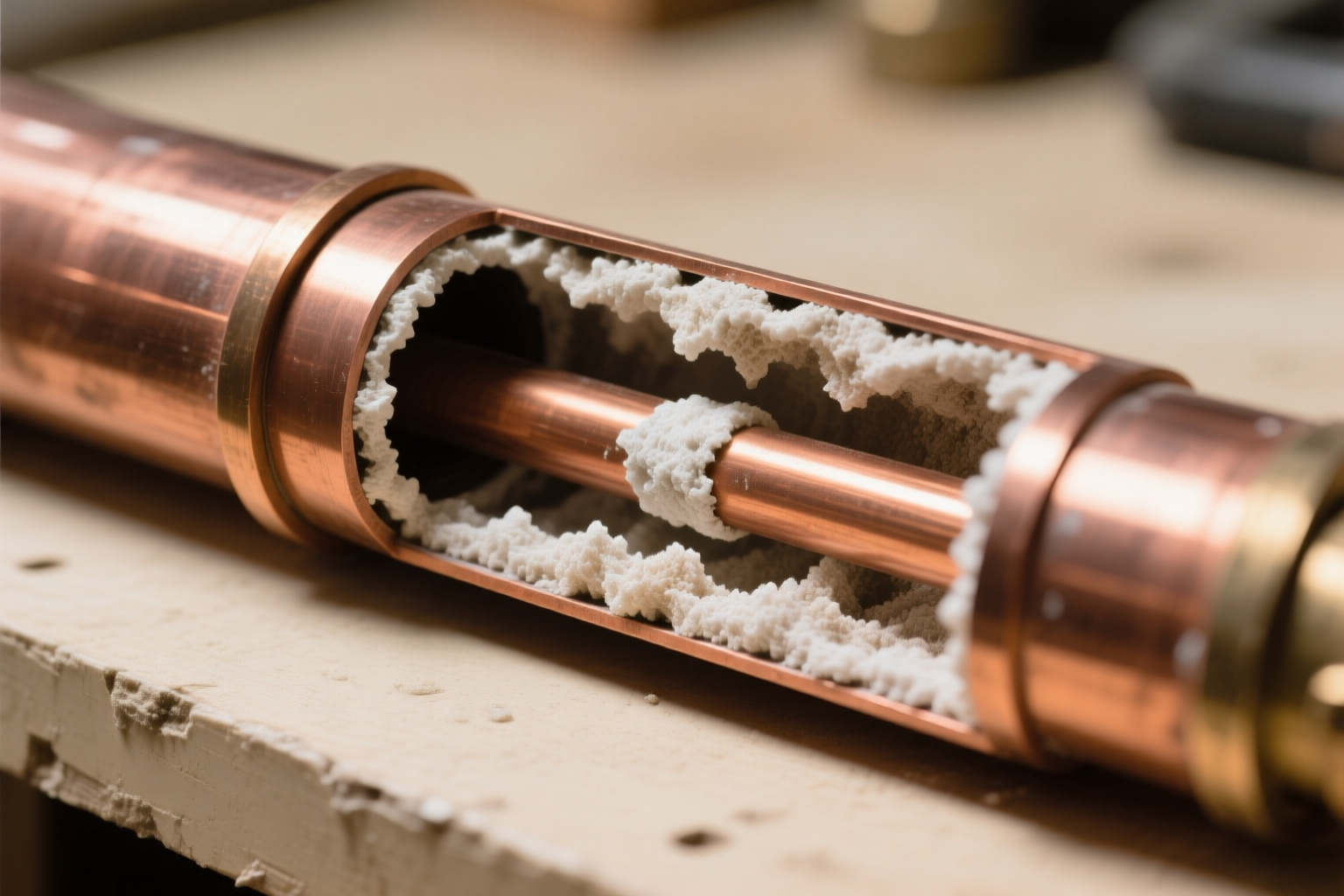
Descaling means circulating a mild acidic solution, usually a food-safe descaler mixed with water, through the unit's heat exchanger in a closed loop, dissolving the mineral scale that's built up on the interior surfaces. It's not a cleaning in the sense of wiping something visible off. The buildup is inside a sealed passage you'll never see without disassembling the unit, which is exactly why it's easy to ignore until performance drops.
Done on schedule, descaling restores the heat exchanger close to its original efficiency and flow rate. Left too long, some of that buildup hardens into a layer a simple flush won't fully remove, and that's when a unit starts needing more than routine maintenance.
It's a maintenance task, not a repair, which is exactly why it's a reasonable one for a homeowner to take on. There's no diagnosis involved, no judgment call about what's wrong. You're circulating a solution through a closed loop for a fixed amount of time, the same procedure every time, on a schedule you can put on a calendar.
02The DIY procedure, step by step
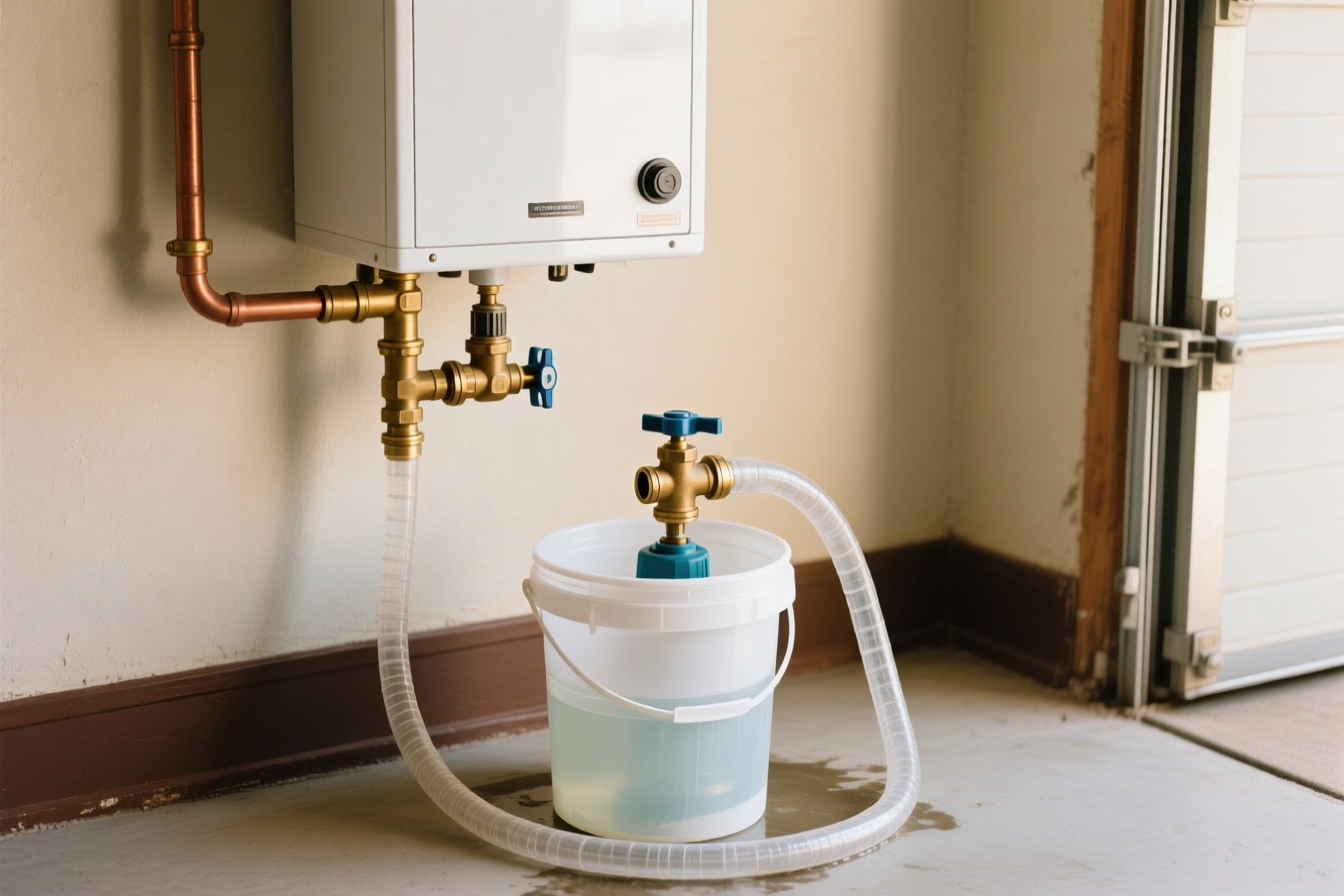
If your tankless unit already has isolation valves, the process is straightforward. Shut off the gas or power to the unit, close the hot and cold isolation valves, and connect the two service ports to a submersible pump and a bucket using the hoses that came with the valve kit. Fill the bucket with roughly four gallons of a food-safe descaling solution, usually a mild diluted vinegar or a manufacturer-approved descaler, and run the pump for 45 minutes to an hour so the solution circulates continuously through the exchanger.
After the circulation cycle, disconnect the pump, flush the unit with a few gallons of plain water to clear the solution completely, then reopen the valves and restore power. Most homeowners spend about 60 to 90 minutes total, most of it just letting the pump run while doing something else nearby. The tools involved, a small submersible pump, two hoses, and a bucket, typically cost less than one professional descaling visit and are reusable indefinitely.
Before restoring power, check the connections for drips once the isolation valves are back open, since a loose hose fitting is the most common small mistake in a DIY flush. It's also worth running a fixture on hot water for a minute after restoring service, both to confirm normal flow returned and to clear any trace of solution from the lines feeding your faucets.
A word on the solution itself: stick to a food-safe descaler made for the purpose, or a properly diluted white vinegar solution if you're following your unit manufacturer's own guidance for it. Undiluted vinegar or a stronger household acid can be harder on gaskets and seals than the job calls for, and it isn't worth the risk to the fittings just to shorten the circulation time.
03How often, honestly
Manufacturer literature often defaults to an annual interval or one tied to gallons processed, numbers written for water that's softer than what runs through most homes in Sacramento, Placer, and El Dorado counties. Given our regional hardness, we recommend descaling every 12 to 18 months as the honest default, tightening that if your household runs heavy hot water use or you've already noticed early symptoms like fluctuating temperature. We go into the water chemistry itself, and why the generic interval falls short here, in how long a tankless unit lasts in hard water.
A calendar reminder is the single most useful thing you can set up alongside the flush itself. The failure mode we see most often isn't a homeowner who refuses to descale, it's one who genuinely intends to and then loses track of when the last one happened. Writing the date on a piece of tape on the unit itself works as well as anything more sophisticated.
We'll do the flush and check the whole unit while we're there
A professional descaling includes a look at the burner, venting, and condensate line too.
Book an Appointment04Four situations where DIY is a mistake
First, no isolation valves. Some older or budget installations skip them, and without valves already in place, descaling means partially disassembling plumbing connections that shouldn't be opened without the right fittings on hand. Second, a manufacturer warranty that requires documented professional service. Several manufacturers will deny a warranty claim without a paper trail showing maintenance was performed by a licensed technician, and a DIY flush leaves no such record. Third, visible corrosion at any fitting or connection. That's a sign of a problem beyond scale, and opening the system yourself risks turning a small leak into a larger one. Fourth, an error code already present on the unit's display. That means the unit is already telling you something specific is wrong, and a routine flush won't diagnose it.
Each of these is genuinely about risk and outcome, not about gatekeeping a simple task. A homeowner without isolation valves who tries to descale anyway is opening fittings that weren't designed to be reopened regularly. A homeowner with corrosion already visible is dealing with a connection that may not seal properly again once disturbed. These are the specific reasons we'd say call, not a general caution against doing your own maintenance.
None of these four situations are common. Most tankless owners with isolation valves, a straightforward warranty, and no active symptoms can descale their own unit safely and save the cost of a visit.
If you're not sure which category your unit falls into, that uncertainty is itself a reasonable reason to have a technician look at it once. We can confirm whether isolation valves are present, check your warranty terms, and note anything unusual, and from there you'll know whether future descalings are yours to do or ours.
05What we do differently on a professional descale
When we descale a unit, the flush itself is the same chemistry a homeowner would use. What we add is a check of the burner assembly, the vent termination, and the condensate line while the unit is already open, since those are the other three things that quietly shorten a tankless unit's life alongside scale. We also document the service date and what we found, which matters if your unit's warranty ever requires proof.
If you don't currently have isolation valves installed, that's a straightforward addition during your first professional descaling, and it's the single change that makes every visit after that a DIY job if that's what you'd rather do. Book a descaling with us once to get the valves in place and a baseline on your unit's condition, and the choice of who does the next one is yours.
06Frequently asked questions
Most homeowners spend about 60 to 90 minutes total, with a 45-minute-to-hour circulation cycle taking up most of that while the pump runs on its own. The tools, a small submersible pump, two hoses, and a bucket, cost less than one professional visit and are reusable indefinitely.
Every 12 to 18 months, tighter than the annual interval most manuals default to, because that number is written for softer water than what runs through most homes in Sacramento, Placer, and El Dorado counties.
Four situations: no isolation valves installed, a warranty that requires documented professional service, visible corrosion at any fitting, or an error code already on the display. Outside those, most owners with valves and no active symptoms can safely do their own flush.
The flush chemistry is the same either way. We add a check of the burner assembly, vent termination, and condensate line while the unit is already open, and document the service date and findings, which matters for a warranty claim.