01How hard is our water, actually
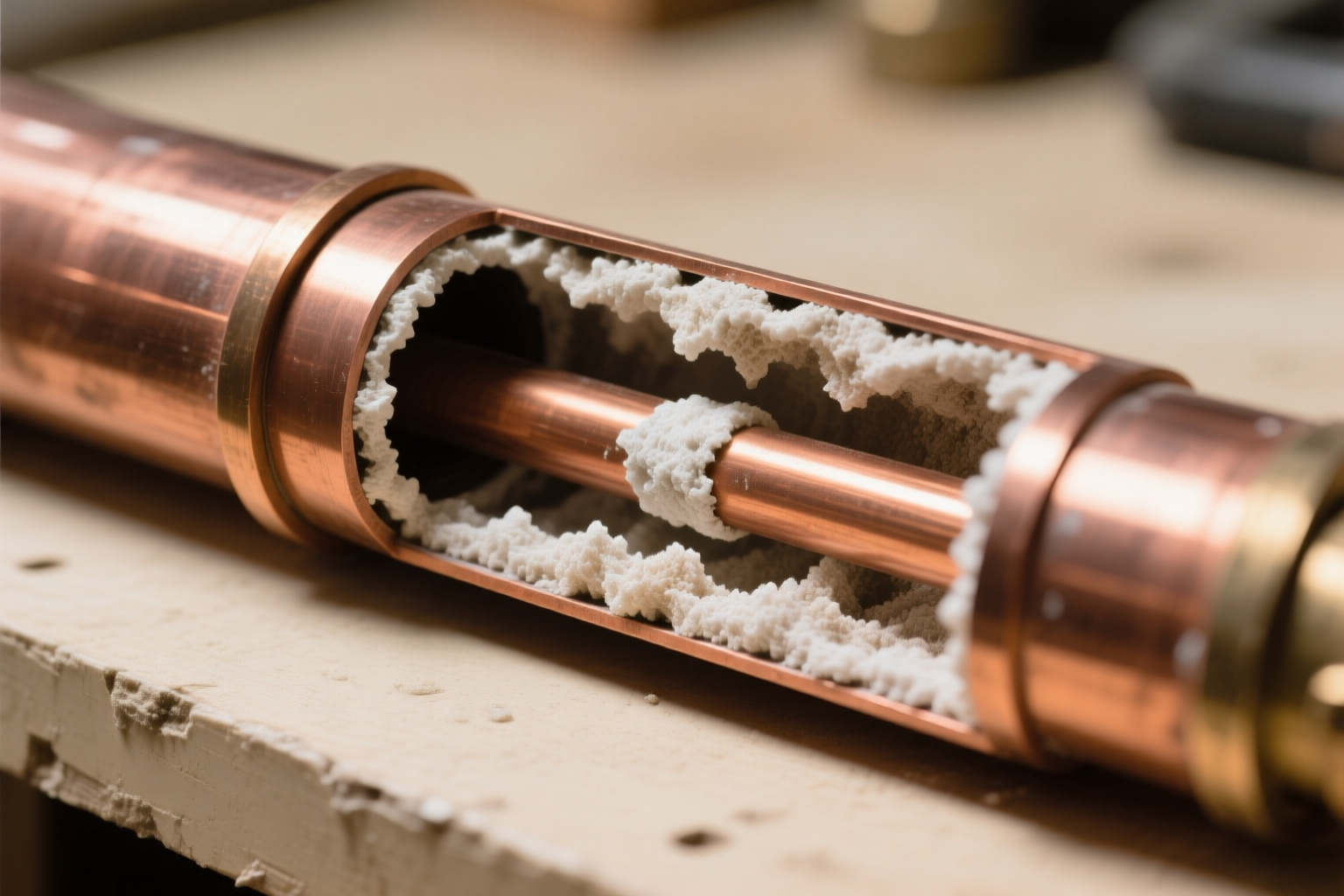
Hardness is measured in grains per gallon, and it comes almost entirely from the calcium and magnesium the water picked up passing through soil and rock before it reached your tap. It is a mineral fact about the water, not a contamination problem, and it has nothing to do with taste or safety. What it changes is what happens when that water sits still or gets heated: the minerals come out of solution and deposit as scale on whatever surface they touch.
Across the region, homes on river-fed surface water tend to run moderately hard, commonly in the range of 8 to 12 grains per gallon. Homes on groundwater-blended or well-influenced supplies, more common toward the foothills, often test harder, sometimes 15 to 20 grains per gallon or more. Those are typical ranges, not a guarantee for your address. A home test strip, sold at any hardware store, gives you the actual number for your tap in about thirty seconds, and it is worth doing before you decide anything about a softener.
What matters practically is that even the moderate end of this range is enough to build noticeable scale over a few years. There is no genuinely soft water anywhere in this region, only a difference in how fast the scale accumulates.
02Hardness by community
The general pattern we see across the sixteen communities we serve:
- Moderate, typically river-fed. Sacramento, Fair Oaks, Carmichael, Orangevale, Citrus Heights, and Folsom draw largely from surface water sources and tend to test in the moderate range.
- Harder, often well-blended or foothill. Roseville, Rocklin, Granite Bay, Lincoln, El Dorado Hills, Cameron Park, Placerville, Auburn, Newcastle, and Loomis more often run harder, and the exact number can vary block to block depending on the local well mix.
These are general tendencies from what we see on service calls, not a substitute for testing your own tap. Two houses on the same street can occasionally test differently depending on the plumbing between the meter and the fixture. If you have moved into one of the harder-water communities from a moderate one, or vice versa, it is worth re-testing rather than assuming your old maintenance schedule still applies.
03What it does to fixtures and pipes
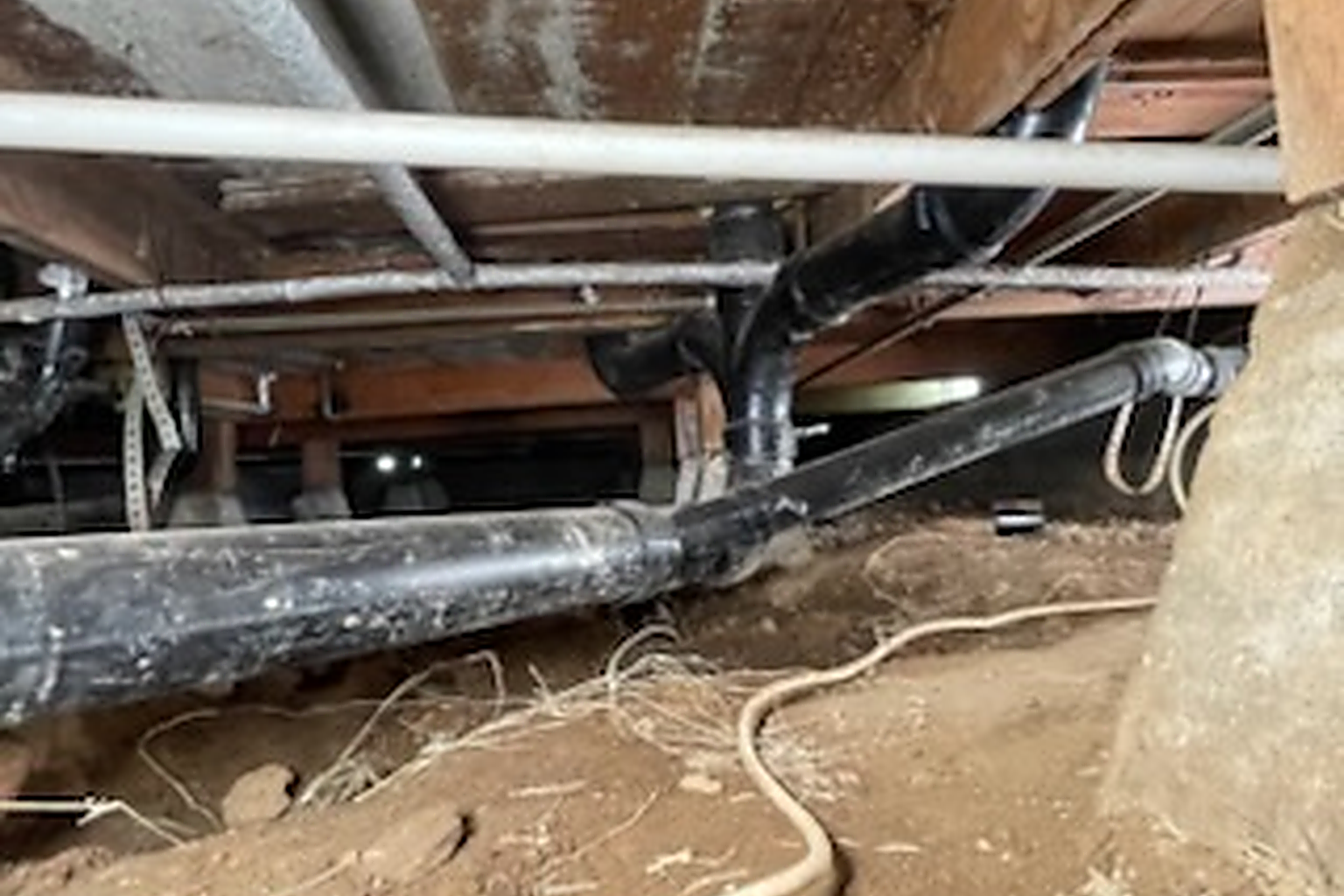
Scale builds wherever water slows down or heats up. Showerheads and faucet aerators clog first because their openings are small and the deposits narrow them further with every use. Shower glass and chrome fixtures pick up the white haze that will not rinse away with plain water. Inside galvanized steel pipe, the same mineral deposits add to the corrosion already narrowing the pipe from within, which is part of why galvanized supply lines in hard-water areas tend to fail on the earlier side of their expected life. If you are seeing pressure loss alongside visible scale, our guide on whether you need a repipe walks through the signs worth checking.
Copper and PEX are far less bothered by hardness itself. Their supply-line failures usually trace back to water chemistry or age rather than scale, which is one more reason the pipe material at your shutoff is worth knowing before you spend money solving the wrong problem.
We can test it during any visit.
A real number for your address, not a regional average, takes about a minute to get.
Book an Appointment04What it does to your water heater
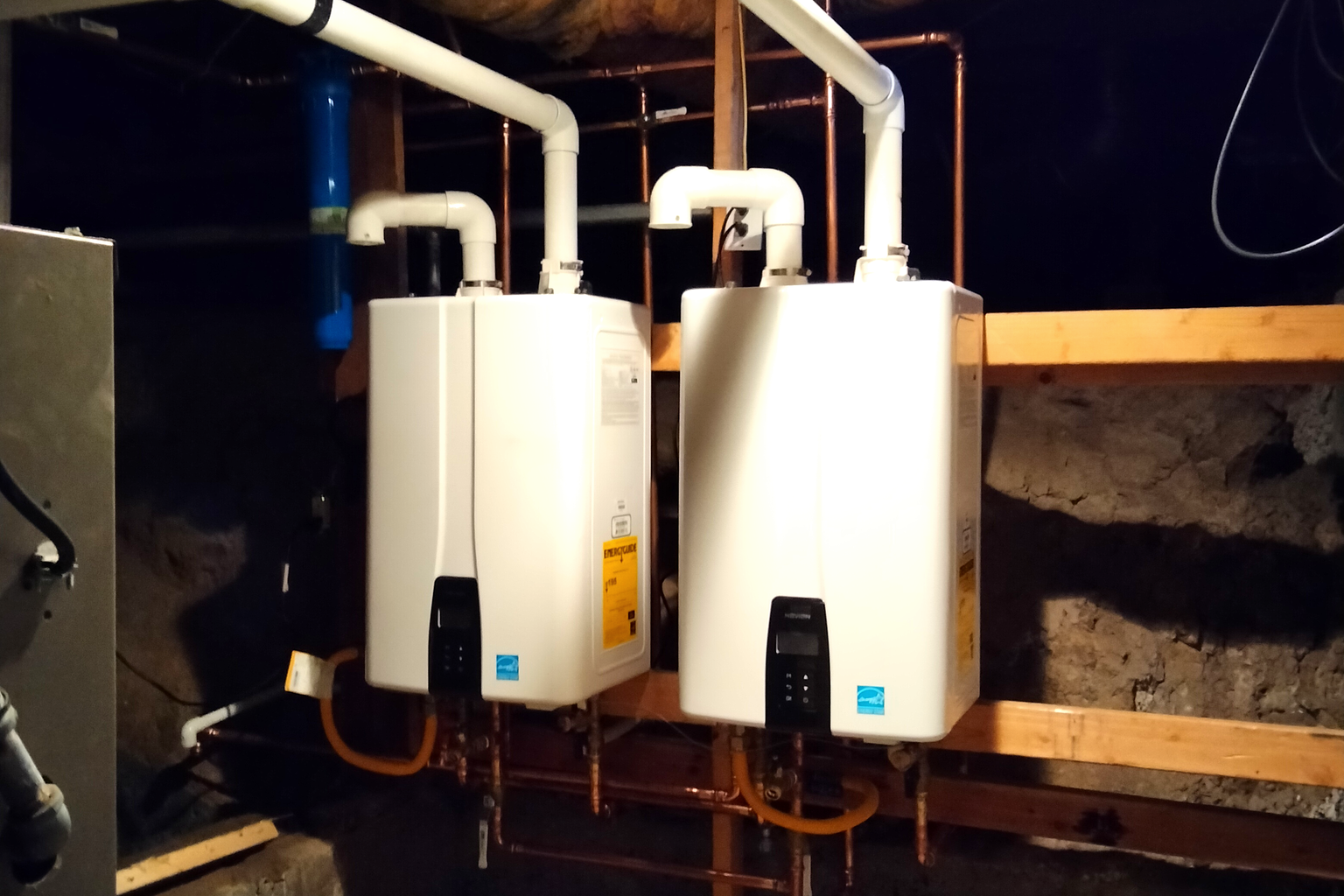
In a tank water heater, mineral sediment settles at the bottom, insulating the burner or element from the water it is supposed to heat. That makes the unit work harder for the same result and shortens its service life. In a tankless unit, the effect is more concentrated: water flashes to a high temperature fast, moving across a compact heat exchanger, and that is exactly the environment where scale deposits form quickest. Manufacturers generally recommend descaling on a broad, generic interval. Given what Sacramento's water actually does to a heat exchanger, we put our tankless customers on a 12 to 18 month schedule instead, and it is the single biggest factor in whether a unit reaches its full fifteen to twenty year lifespan or fails early. If you are choosing between a tank and a tankless replacement, our tankless versus tank comparison walks through the real numbers for this area.
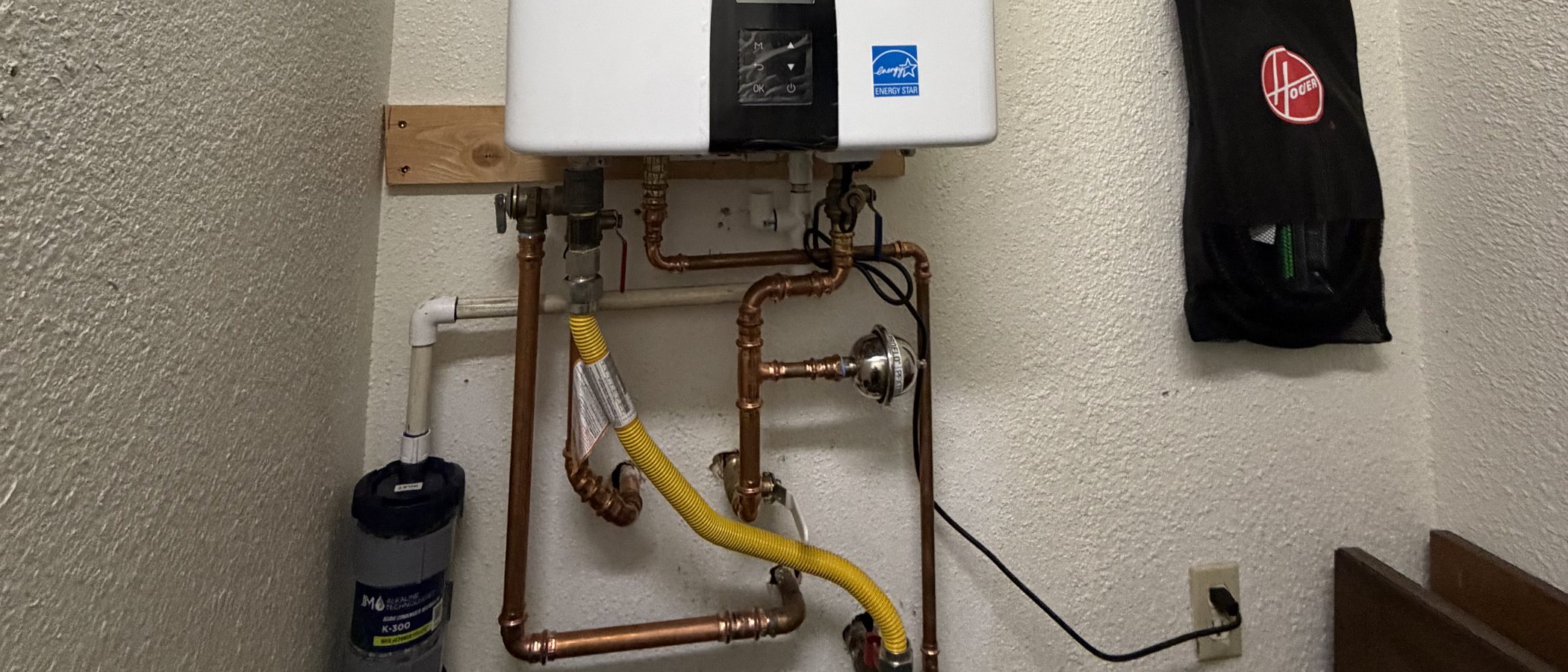
Isolation valves make the difference between a straightforward flush and a more involved service call. If your unit has them installed, descaling is a contained, predictable job. If it does not, the first visit usually includes adding them, which is a one-time cost against years of easier maintenance afterward.
05Is a softener worth it
A softener treats water at the point it enters the house, exchanging calcium and magnesium for sodium before scale ever has a chance to form. It genuinely reduces scale buildup going forward on every fixture and every piece of equipment downstream. It does not undo scale already deposited inside old pipe or an aging water heater, and it comes with an ongoing cost: salt refills, a small amount of water used in the regeneration cycle, and the softener unit itself to install and maintain. For a household in one of the harder-water communities running a tankless unit, the math usually favors installing one. For a moderate-hardness area with a simple maintenance schedule already in place, it is a closer call, and we will tell you honestly which side of that line your situation falls on.
A softener is also not a substitute for descaling a tankless unit. It reduces how fast scale forms going forward, but it does not eliminate hardness entirely and it does nothing for equipment installed before the softener went in. The two are complementary, not either-or.
06What to actually do about it
Test your water so you know your real number instead of a regional guess. If you run a tankless unit, keep it on a 12 to 18 month descaling schedule rather than the manufacturer's generic default. If you are seeing scale on fixtures and shower glass, a whole-house softener is worth pricing out, weighed against the ongoing cost of running one. And if you are also seeing pressure loss or repeat leaks alongside the scale, that combination points toward the supply lines themselves, not just the water passing through them. We serve all sixteen communities across Sacramento, Placer, and El Dorado counties, and the maintenance advice differs slightly depending on which one you are in, which is exactly why we test rather than guess.
None of this requires an annual contract or a sales visit to sort out. A test strip and an honest look at your equipment's age and history tells you almost everything you need to know, and we are glad to walk through the results with you even if the answer is that nothing needs to change yet.
07Frequently asked questions
Communities on river-fed surface water like Sacramento, Fair Oaks, and Folsom tend to run moderate, roughly 8 to 12 grains per gallon. Foothill and well-blended communities like Roseville, Auburn, and Placerville often run harder, 15 to 20 grains or more. A home test strip gives you the real number for your tap in about thirty seconds.
No. Hardness is a mineral fact about the water, not a contamination problem, and it has nothing to do with taste or safety. What it changes is what happens when that water sits still or gets heated inside your plumbing.
Usually yes for a household in a harder-water community running a tankless unit. It's a closer call in moderate-hardness areas. Either way, a softener reduces future scale but doesn't undo scale already deposited, and doesn't replace a descaling schedule.
We put tankless customers on a 12 to 18 month descaling schedule instead of the manufacturer's generic default, since it's the single biggest factor in whether a unit reaches its full fifteen to twenty year lifespan or fails early.