01Why it's a free estimate, not a phone price
We won't quote a firm number over the phone, and we'd tell you to be cautious of anyone who does. The tankless installation itself, the labor to mount the unit and connect it, is fairly consistent from house to house. What varies is everything the unit depends on to run safely: the fuel supply, the exhaust path, and the drain for the water the unit condenses out of the exhaust. Those three items are decided by your house's existing infrastructure, not by us, and none of them are visible from the driveway.
That's why our estimate is written after we've actually looked at your gas meter, your attic or exterior wall, and your water heater closet, not before. That estimate is free, whether or not you decide to go ahead.
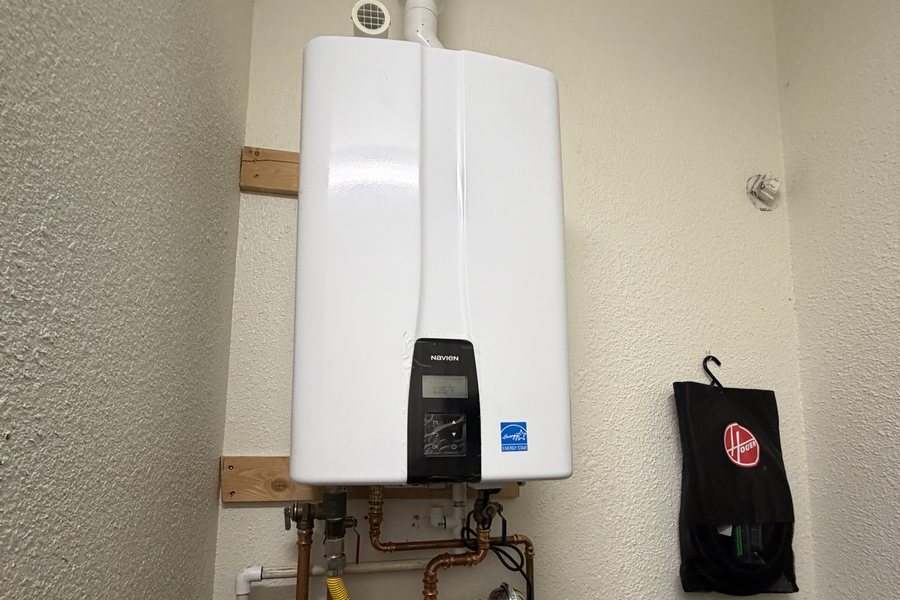
A typical estimate visit takes fifteen to twenty minutes. We check the gas meter's rated capacity against the unit's peak demand, trace the shortest reasonable vent path, and look at where a condensate line would need to go. We write the number down in front of you before we leave, with the specific items driving it named, not bundled into a single lump sum you have to take on faith.
02Gas line sizing: the most common cost driver
Tankless units draw significantly more gas at peak than a standard tank, because they're heating water instantly rather than over hours. A gas line and meter sized correctly for a 40-gallon tank is frequently undersized for a tankless unit's peak demand. When that's the case, the line has to be upsized, sometimes just the last run to the water heater closet, sometimes back to the meter itself if the meter's own capacity is the limiting factor.
This single item is responsible for more of the spread in our published range than any other factor. A house with an already-oversized line built during a prior remodel can install tankless for close to the low end. A house with an original, minimally sized line from the 1970s may need meter and line work that pushes the job toward the top of the range or, in rare cases, requires a conversation with the gas utility before we can proceed at all.
We size the new run to the specific unit's rated BTU input, not a generic estimate, because undersizing it defeats the purpose of upgrading at all: a tankless unit starved of gas at peak demand will simply deliver less hot water than it's rated for, which is the exact complaint we get called out to fix on installs done by someone who skipped this step.
03Venting and condensate drainage
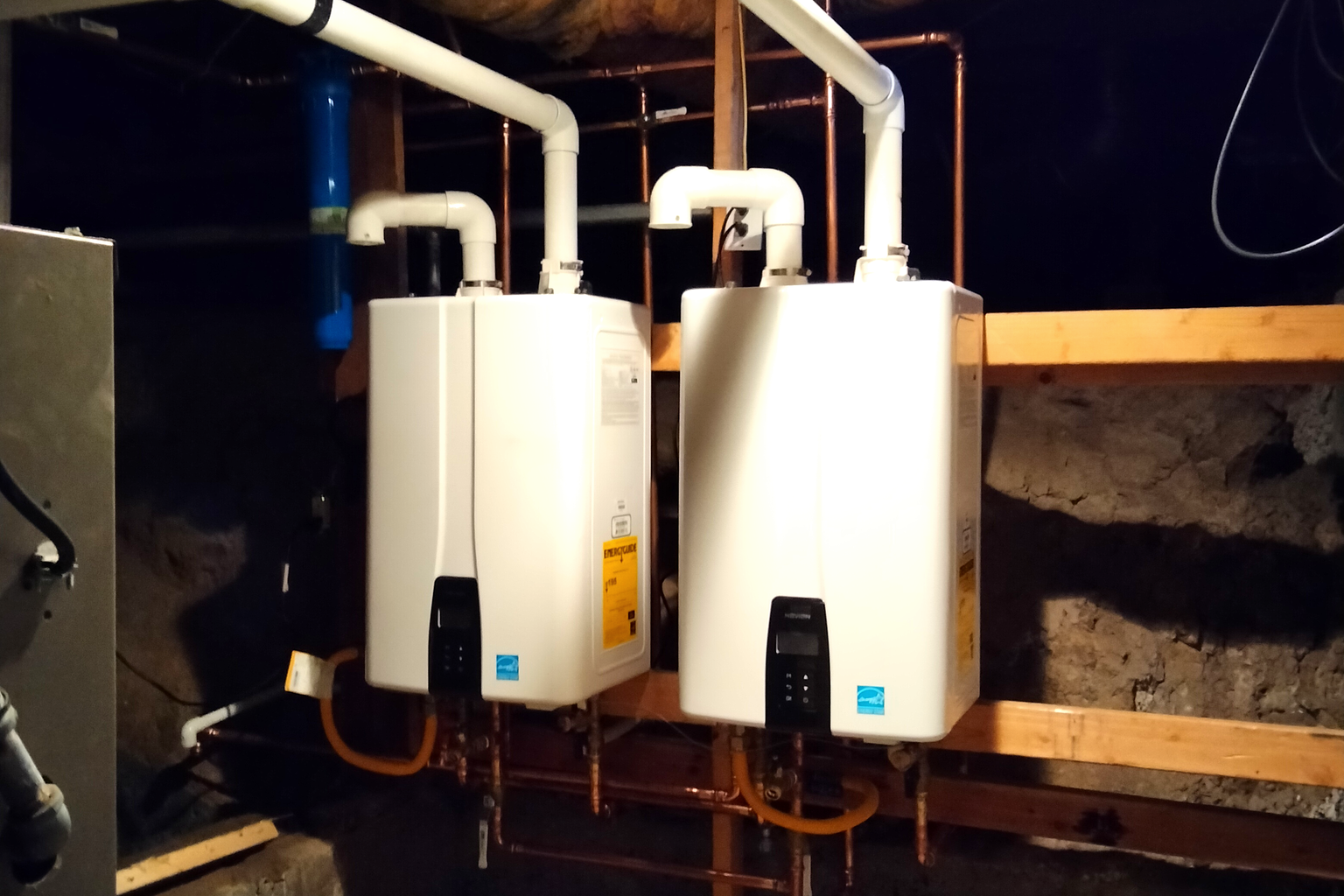
Tankless units vent differently than tank units, usually through a dedicated PVC or stainless run rather than a shared metal flue, and that run has to reach a termination point that meets clearance requirements from windows, doors, and property lines. A garage-mounted unit on an exterior wall might vent in a few feet. A unit relocated to an interior closet can require a much longer run through an attic, which adds both material and labor.
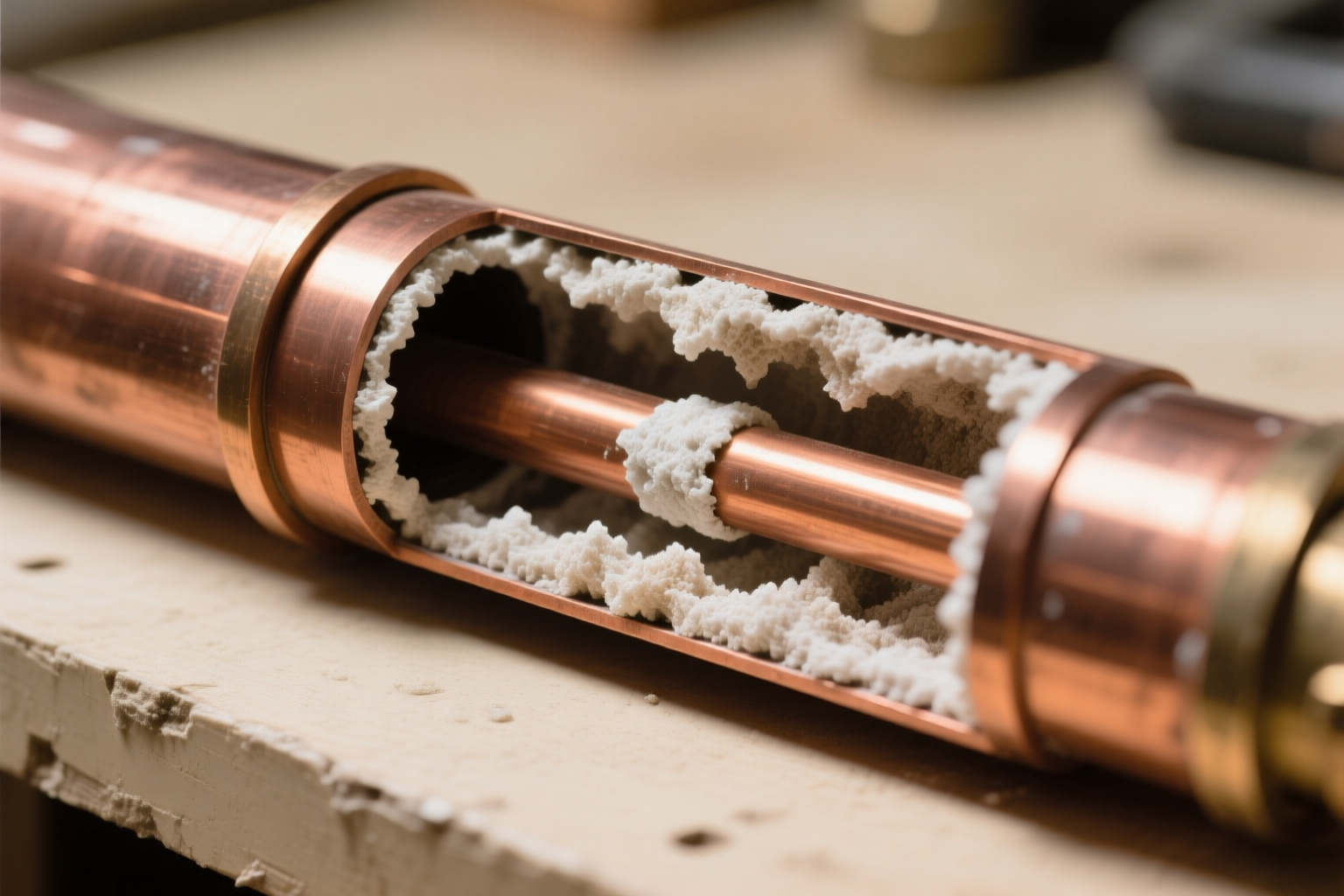
Condensate is the other piece manufacturers rarely mention until the estimate. High-efficiency tankless units produce acidic condensate that has to drain somewhere safely, typically to a floor drain, a condensate pump, or an approved outdoor discharge point. If none of those exist near the unit's new location, we have to add one, and that's real plumbing work, not an afterthought.
Electrical is the fourth item, smaller but not always zero. Most tankless units need a standard outlet nearby for the control board and ignition, and some higher-output models call for a dedicated circuit. If the water heater closet has never had power run to it, that's a short but real electrical job added to the estimate, usually a modest line item compared to the gas and venting work but one we account for rather than discover mid-installation.
We'll look before we quote
Fifteen minutes at your gas meter and water heater closet tells us more than any phone estimate can.
Book an Appointment04Permits, and what they add
We pull a permit on every tankless install, and the fee is part of the quoted range, not an add-on discovered later. Sacramento, Placer, and El Dorado counties each set their own fee schedule and inspection timeline, so the exact permit cost varies by jurisdiction and by whether the job includes gas line or electrical work beyond the water heater itself. What doesn't vary is the reason we pull it: an unpermitted gas appliance installation is a real problem at resale and, more urgently, an unpermitted gas connection is a safety question we're not willing to skip past.
The permit also adds time, not just cost. Inspection scheduling varies by county and by season, and a straightforward job can usually get inspected within a few business days, while a busier stretch can push that out further. We build the realistic timeline into what we tell you up front rather than promising a same-day close-up that depends on an inspector's calendar we don't control.
05Three homes, three different numbers
To make the range concrete: a single-story home with an adequately sized gas line, a garage-mounted unit venting straight through the exterior wall, and an existing floor drain nearby lands near the bottom of the range, since almost nothing has to change beyond the unit itself. A two-story home relocating from a hallway closet to an exterior-adjacent wall, needing a longer vent run and a new condensate line, sits in the middle. A home built before the 1980s with an undersized gas meter, no existing condensate path, and a wall that has to be opened to route the vent cleanly lands at the top, sometimes requiring a return visit once the gas utility completes meter work.
None of those three needed a different water heater. They needed different amounts of work around it, which is the entire reason two honest quotes for the same brand of unit can look nothing alike.
This is also why we'd encourage you to be skeptical of a single flat number quoted before anyone has seen your gas meter or your water heater closet. A number that low might reflect a genuinely simple job, or it might be missing one of the four items above and waiting to appear as a change order once the wall is already open. Ask what's included, specifically, before comparing two bids on price alone.
06Frequently asked questions
It depends entirely on your house, which is why we don't quote it over the phone. We write the exact number down in front of you after a fifteen- to twenty-minute look at your gas meter, attic or exterior wall, and water heater closet, not before. That estimate is free.
Tankless units draw significantly more gas at peak than a standard tank, so a line sized for a 40-gallon tank is often undersized. An already-oversized line lands near the low end of our range; an original, minimally sized line from the 1970s can push the job toward the top or require meter work first.
Yes, on every install, and the fee is part of the quoted range, not a surprise add-on. Sacramento, Placer, and El Dorado counties each set their own fee schedule and inspection timeline, so the exact cost and wait vary by jurisdiction.
Because the unit itself is fairly consistent in cost, what varies is the gas line, venting, condensate drainage, and electrical work your specific house needs. A number quoted before anyone has seen your gas meter or closet may simply be missing one of those items.