01The pipe under your street
Most of Fair Oaks and Carmichael was built out through the 1950s and 60s, and the sewer laterals from that era follow the standard of their time: clay pipe in short sections joined with a bell-and-spigot fitting, running three to five feet down, with a shorter run of cast iron near the foundation where the line leaves the house. Neither material is defective by the standards of its day. Clay is genuinely durable in undisturbed soil. The trouble is joints, and there are a lot of them over a sixty-foot run, each one a place where a root can find a hairline gap and start working.
Cast iron ages differently. It corrodes from the inside out, and the scale that builds up narrows the usable diameter of the pipe years before anyone notices a backup. By the time a homeowner calls, the cast iron section is often thinner than the clay it connects to.
Depth matters too. A lot of these laterals sit shallower than current code would require, laid before the standards that govern new construction today. That shallow depth is part of why root intrusion happens earlier here than in a newer subdivision: less soil between the pipe and everything growing above it.
02Why the oaks make it worse
Valley oaks planted as saplings in 1955 are mature trees now, with root systems that can extend well past the drip line in search of water. A sewer lateral running with a slow, steady trickle of warm, nutrient-rich water is exactly what a root is looking for. Roots do not break a sound pipe. They find a joint that has already opened slightly from age or ground settling, work a hairline root mass through it, and then thicken over years until the mass itself blocks flow or cracks the joint wider.
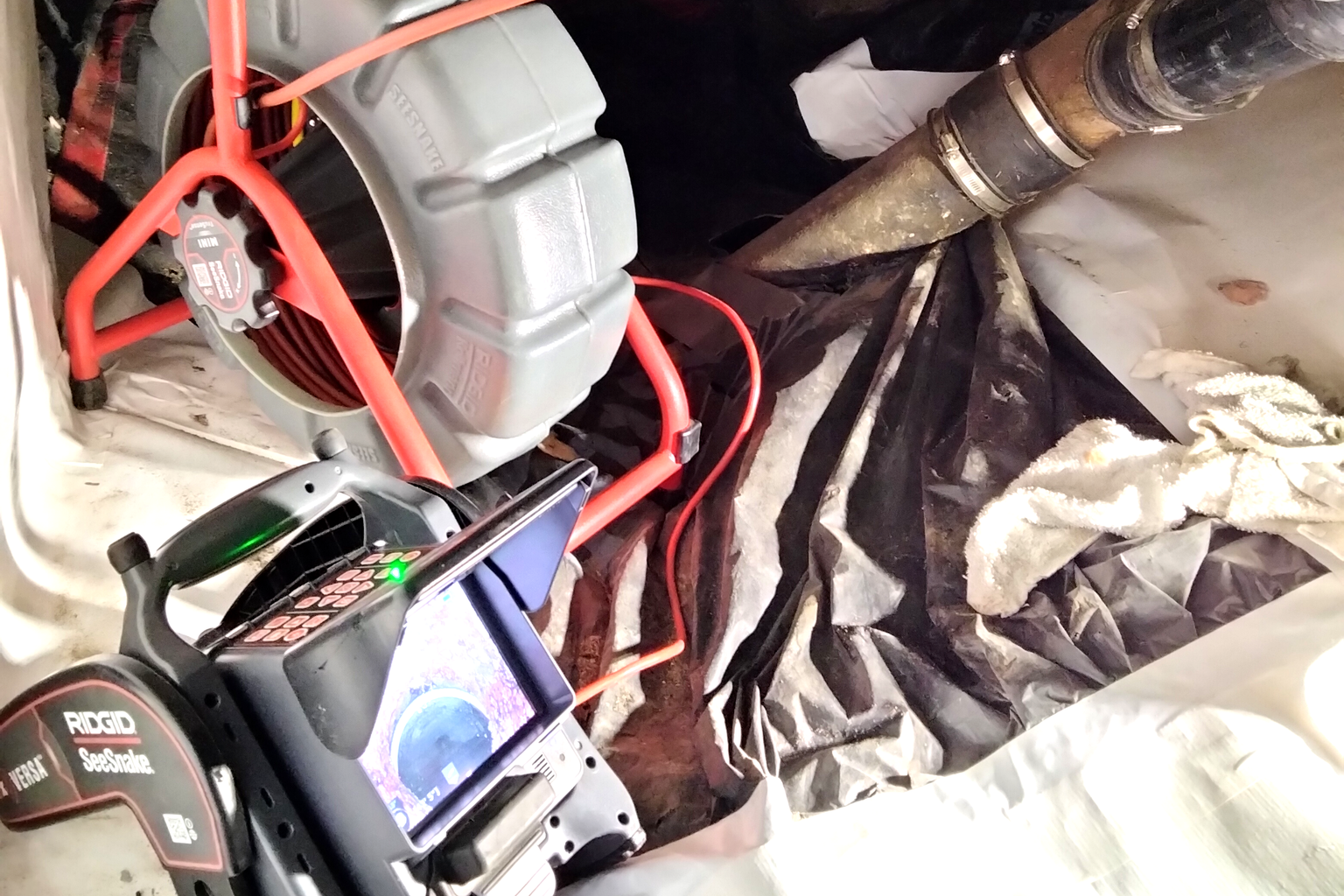
This is why the same spot backs up again and again even after root cutting. Cutting the roots inside the pipe removes the blockage for a while, but the joint that let them in is still open, and the tree has not stopped growing. A camera inspection shows whether you are dealing with an isolated root intrusion that a spot repair can fix, or a lateral with several failing joints where the honest recommendation is replacement.
We see the same pattern often enough to trust it: one root mass near the street connection, cleared twice already, with two more soft spots further down the line that have not caused a backup yet only because they have not grown in enough. Treating the visible symptom and ignoring what the camera shows further down is how a homeowner ends up paying for the same drain cleaning three times in eighteen months.
03Trenchless or open trench
Trenchless methods, pipe bursting or a cured-in-place liner, avoid digging up the yard and are worth asking about first. They work when the existing pipe still has enough structural integrity to guide the new liner or host the bursting head, when there is no major belly or sag pulling the line off grade, and when access pits at each end can reach the line without going under a structure. A driveway, mature landscaping, or a detached garage sitting over the lateral all make trenchless the more attractive option on cost alone.
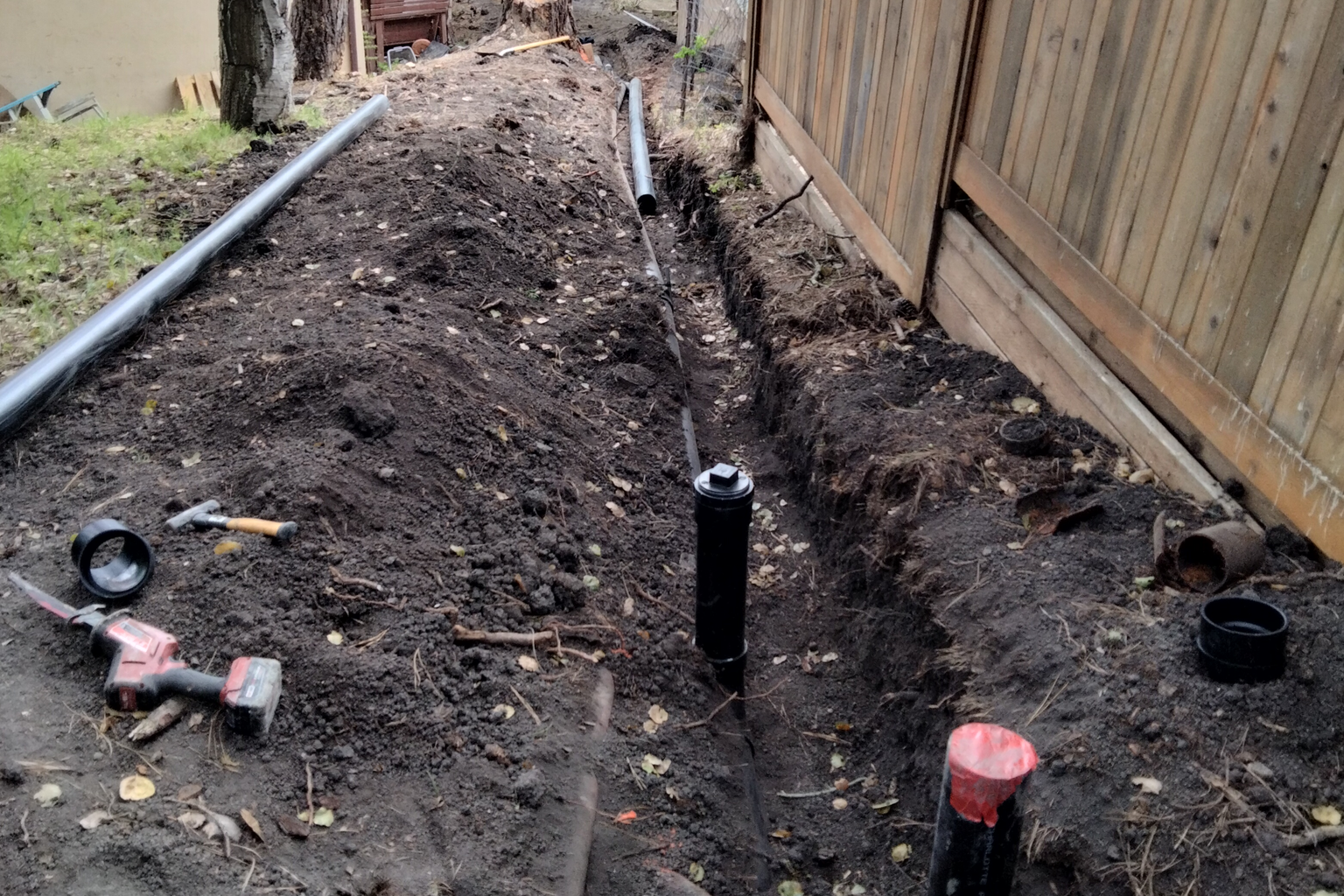
Open trench is the right call when the camera shows a collapsed section, a belly deep enough that lining would just preserve the low spot, or a lateral so offset at the joints that a liner cannot travel through cleanly. It is also sometimes simply cheaper when the yard has no landscaping worth protecting and the trench can follow a straight, shallow path. We tell you which situation you are in after the camera inspection, not before.
There is no version of this where we quote trenchless because it sounds better on paper and then discover mid-job that the pipe cannot support it. The camera inspection happens first specifically so the method is decided on real information, and so the number we give you is the number the job actually costs.
04What the job involves
We pull a permit from the county before any digging starts. A camera inspection maps the failure points and confirms the method. Then it is either the bore and burst or liner setup for trenchless, or the trench itself for open dig, both sized and routed to the confirmed depth and path rather than a guess. Before backfill, the county inspector looks at the completed line. That inspection is the entire point of the permit: it puts a record on file that the work meets code, which matters at resale and matters if anything ever goes wrong with the line later. Our sewer services page has the camera inspection pricing if you want to start there.
Once the inspection passes, we backfill and restore the surface, whether that is turf, decomposed granite, or a section of concrete. We photograph the finished line before it goes back under, so you have a record of exactly what is down there and where, which is worth more than it sounds the next time anyone needs to dig near it.
A camera in the line answers it in under an hour.
You watch the screen with us, and you get a real answer before any number gets discussed.
Book an Appointment05Cost and timeline
Sewer line replacement in this area is quoted in writing after a free estimate. Depth, total length, and whether trenchless works on your site drive most of the range, not the crew doing the work. A short, shallow trenchless job sits at the low end. A long run with a collapsed section that forces open trench, or a lateral running under a structure, sits at the high end. We give you the real number after the camera inspection, with the reasoning behind it, not a range picked to sound reasonable over the phone.
Most jobs, once permitted and scheduled, take one to three days on site. County inspection scheduling can add a few days to the calendar even when the physical work is fast, which is worth planning around if you have a deadline, particularly if you are trying to close a sale.
If you are weighing a replacement against another round of drain cleaning, ask for the camera footage either way. A company that will not show you what it found is asking you to trust a number instead of a diagnosis, and on a job at this price, you should not have to.
06Frequently asked questions
Most of the area was built through the 1950s and 60s with clay pipe joined in short sections and a shorter cast iron run near the foundation. These laterals also sit shallower than current code requires, which is part of why root intrusion happens earlier here than in newer subdivisions.
Cutting the roots removes the blockage temporarily, but the joint that let them in is still open and the tree hasn't stopped growing. A camera inspection shows whether it's an isolated intrusion a spot repair can fix, or a lateral with several failing joints.
The camera inspection happens first. Trenchless works when the existing pipe has enough structural integrity and there's no major belly; open trench is the right call for a collapsed section, a deep belly, or joints too offset for a liner to travel through cleanly.
Driven mostly by depth, total length, and whether trenchless works on your site. You get the real number in a free written estimate. Most jobs, once permitted and scheduled, take one to three days on site, plus a few days for county inspection scheduling.