01Why repeat snaking treats the symptom, not the cause
A cable snake is a mechanical tool: it cuts or pushes through whatever is blocking the pipe and restores flow. What it cannot do is tell you why the blockage formed in that exact spot rather than anywhere else along the line. If the underlying condition is still there after the cable comes out, the same spot will catch debris again, usually within weeks or months, and the homeowner ends up paying for the same visit repeatedly.
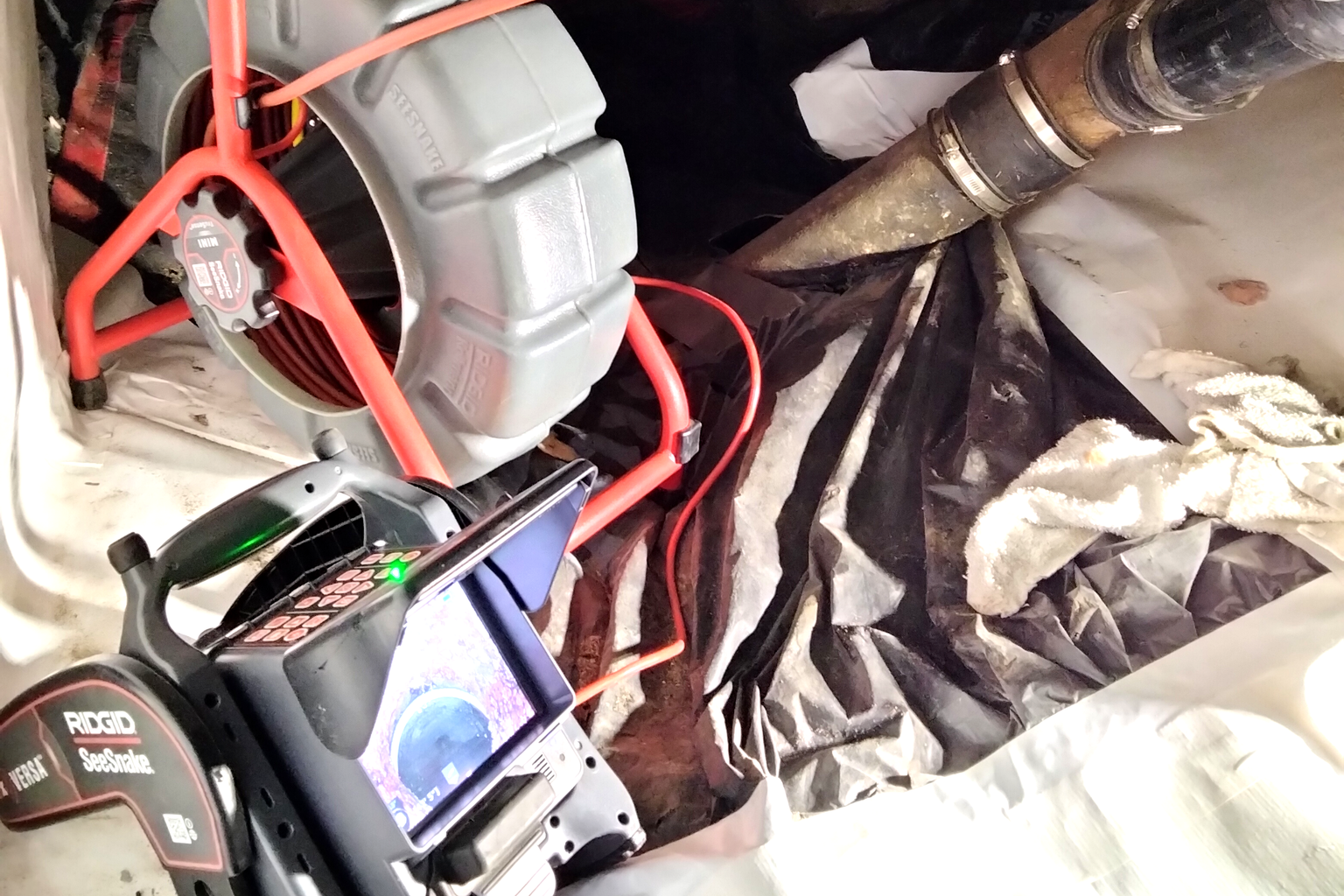
A camera inspection puts a lens down the line instead of a blade, and you watch the screen with us. It doesn't clear anything by itself, but it shows exactly which of the following five conditions is actually present, which is the difference between guessing at a fix and choosing the right one.
The pattern that tells us it's time to look with a camera rather than snake again is simple: the same drain backing up for the second or third time within a year, especially if the interval between backups is shrinking rather than staying steady. A single isolated clog from something flushed or poured down the wrong drain doesn't need a camera. A recurring one almost always does.
02Root intrusion
Tree roots find their way into sewer lines through hairline cracks or loose joints, drawn by the moisture and nutrients inside. Once a root gets a foothold, it grows into a dense mass that catches paper, wipes, and grease passing through, which is what actually causes the backup. Snaking cuts through the root mass temporarily, but the root remains rooted at the crack and regrows, often faster than homeowners expect. On camera, root intrusion is unmistakable: a visible mass of fine or thick roots filling part or most of the pipe's diameter at a specific joint.
Mature trees are common across many of the neighborhoods we serve, and a large valley oak or similar tree near an older sewer lateral is often exactly where we find this. The fix depends on how established the intrusion is: a localized cut and seal at one joint can resolve an early case, while a heavily compromised older lateral running under root systems that have had decades to establish may point toward replacement instead.
03A belly, or sag, in the line
A belly is a low spot where the pipe has settled or was installed without proper slope, creating a section where water and solids pool instead of draining continuously toward the main. Over time that standing water lets solids settle and compact, and the belly becomes a recurring collection point for exactly the kind of blockage a snake keeps having to clear. A snake can push through a belly's contents without ever revealing that the pipe itself dips at that point. On camera, a belly shows as water sitting in the pipe with no slope carrying it forward, visible as soon as the lens reaches that section.
A minor belly sometimes just needs to be managed, with more frequent cleaning of that one section as a maintenance routine rather than a full repair. A more significant one, where the sag is deep enough that it's collecting solids faster than routine cleaning can keep up with, usually needs the settled section excavated and relaid at the correct slope. The camera footage, and how much standing water it shows, is what tells us which situation we're actually looking at.
See it on the screen before you pay for a guess
Camera inspection is quoted upfront, credited toward the repair if you move forward with us.
Book an Appointment04An offset joint
Sewer lines are built from sections joined at regular intervals, and ground movement, settling soil, or age can shift one section out of alignment with the next. Even a small offset creates a ledge or lip where debris catches every time waste flows past it, effectively turning that joint into a permanent snag point. A snake typically clears the debris caught at the ledge without addressing the ledge itself, so the same joint keeps catching material call after call. On camera, an offset joint appears as a visible step or misalignment between two pipe sections, easy to point to once you're looking at it.
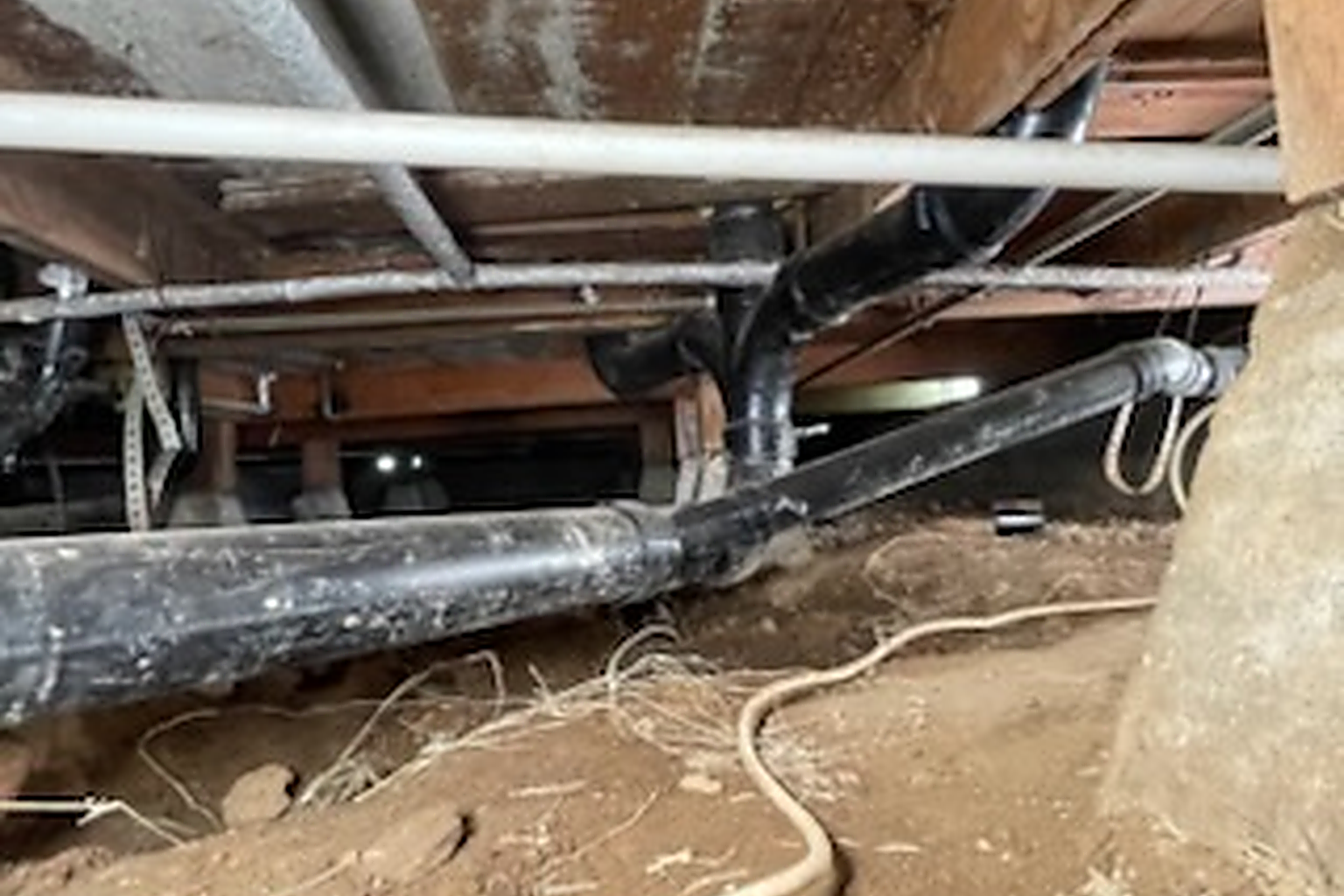
Offset joints are common in older clay pipe, where the joints themselves are simple butt connections without the flexible gaskets modern PVC uses. Depending on severity, a repair can sometimes be done locally at just that joint rather than requiring the whole line replaced, which is one of the clearer cases where a camera inspection saves money rather than just diagnosing a problem.
05Scale and grease buildup
Grease poured down a kitchen drain, combined with the mineral scale our regional water tends to leave behind, can harden into a coating along the interior wall of the pipe over years. That coating narrows the effective diameter of the line the same way scale narrows a tankless heat exchanger, and it gives solids something to stick to as they pass. A snake bores a channel through the buildup rather than removing it, which is why the same drain narrows again a few months later. On camera, this shows as a visibly reduced, often rough-textured diameter running along a stretch of pipe rather than one isolated point.
This is the one condition on this list a homeowner has real influence over day to day. Grease disposed of in the trash rather than down the drain, and hot water flushed through a kitchen line occasionally, both slow how fast this coating builds. Once it's established, though, a hydro-jetting service, which uses high-pressure water rather than a cable, generally clears it more completely than snaking ever could.
06A collapsed section
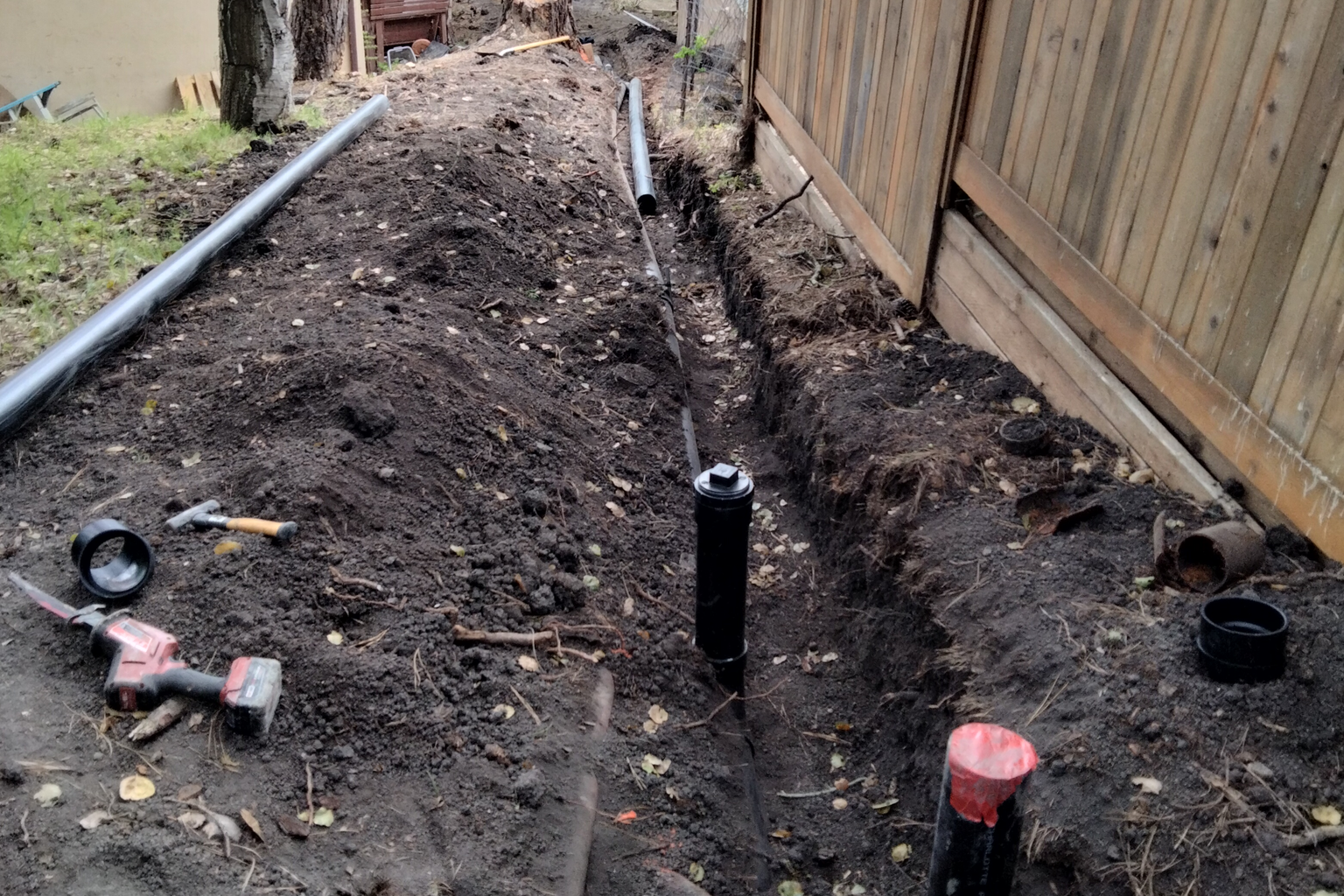
The most serious of the five, a collapsed section means the pipe has structurally failed, crushed by soil pressure, root pressure, or simple age in older clay or cast iron material. A snake cannot pass a true collapse cleanly and may come back with visible pipe fragments, which is often the first real clue something beyond a routine clog is happening. This is the condition most likely to require excavation and replacement rather than a cleaning, and camera footage is what confirms the extent of it before anyone commits to that scope of work. A full sewer line replacement in this region typically is quoted in writing after a free estimate, driven by length, depth, and access, and we only recommend it once the camera has shown us it's actually needed.
We serve homes across Sacramento, Placer, and El Dorado counties, and older neighborhoods in several of those communities have exactly the clay and cast iron laterals where these five conditions show up most often.
07Frequently asked questions
Snaking clears whatever is blocking the pipe but doesn't address why it formed there. If the underlying cause, root intrusion, a belly, an offset joint, scale buildup, or a collapse, is still present, the same spot catches debris again within weeks or months.
The same drain backing up for the second or third time within a year, especially if the interval between backups is shrinking. A single isolated clog from something flushed or poured down the wrong drain doesn't need a camera; a recurring one almost always does.
It is quoted upfront, credited toward the repair if you move forward with us. You watch the screen with us, so you see exactly which of the five conditions is present before anything is recommended.
A full sewer line replacement in this region typically is quoted in writing after a free estimate, driven by length, depth, and access. We only recommend that scope once the camera has shown it's actually needed, not before.