01What we expected
The call was straightforward: a forty-gallon tank in an Orangevale garage was thirteen years old, showing rust at the base, and the homeowner wanted to switch to tankless while they still had hot water to plan around instead of an emergency. On paper, this is one of the simpler jobs we run. The unit was going on roughly the same exterior wall, the vent path looked short, and there was already a floor drain nearby for the condensate. We quoted it as a routine swap and blocked half a day.
02What we actually found
The gas line told a different story once we opened the meter and traced it back. The house had its tank replaced once before, sometime in the early 2000s by the look of the fitting, and whoever did that swap ran a new tank off the same half-inch line that had fed the original unit for decades. A forty-gallon tank barely notices that. A tankless unit does not: at peak demand it can call for two to three times the gas a tank ever draws, and a half-inch line run that far from the meter would have starved the burner the first time two fixtures ran hot water at once in winter.
This is exactly the kind of thing a quote based on a phone call or a photo can miss, and exactly why we walk the gas line in person before anyone commits to a number. It would have shown up eventually, as an error code and a cold shower, instead of during the estimate where it belongs.
03What we did
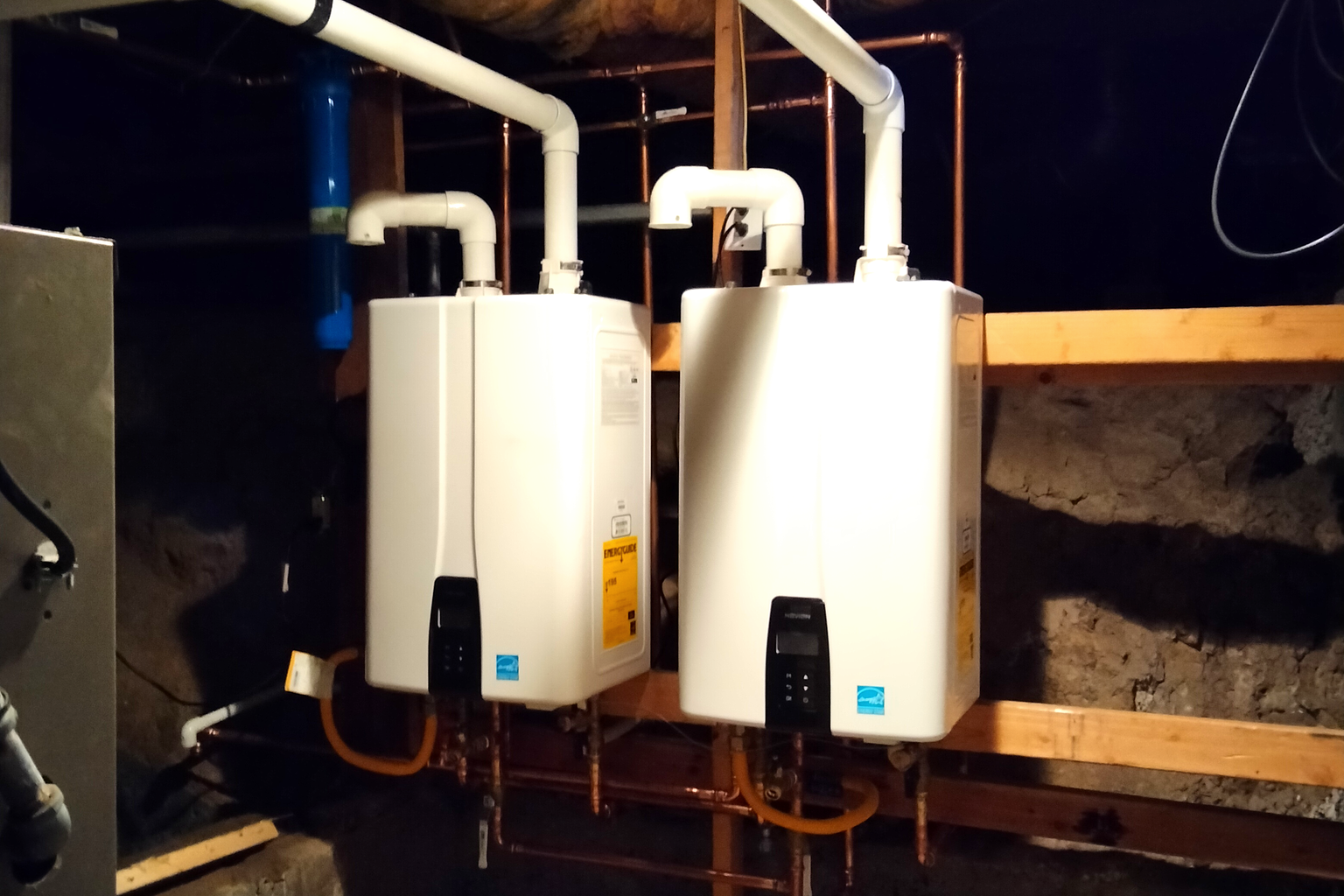
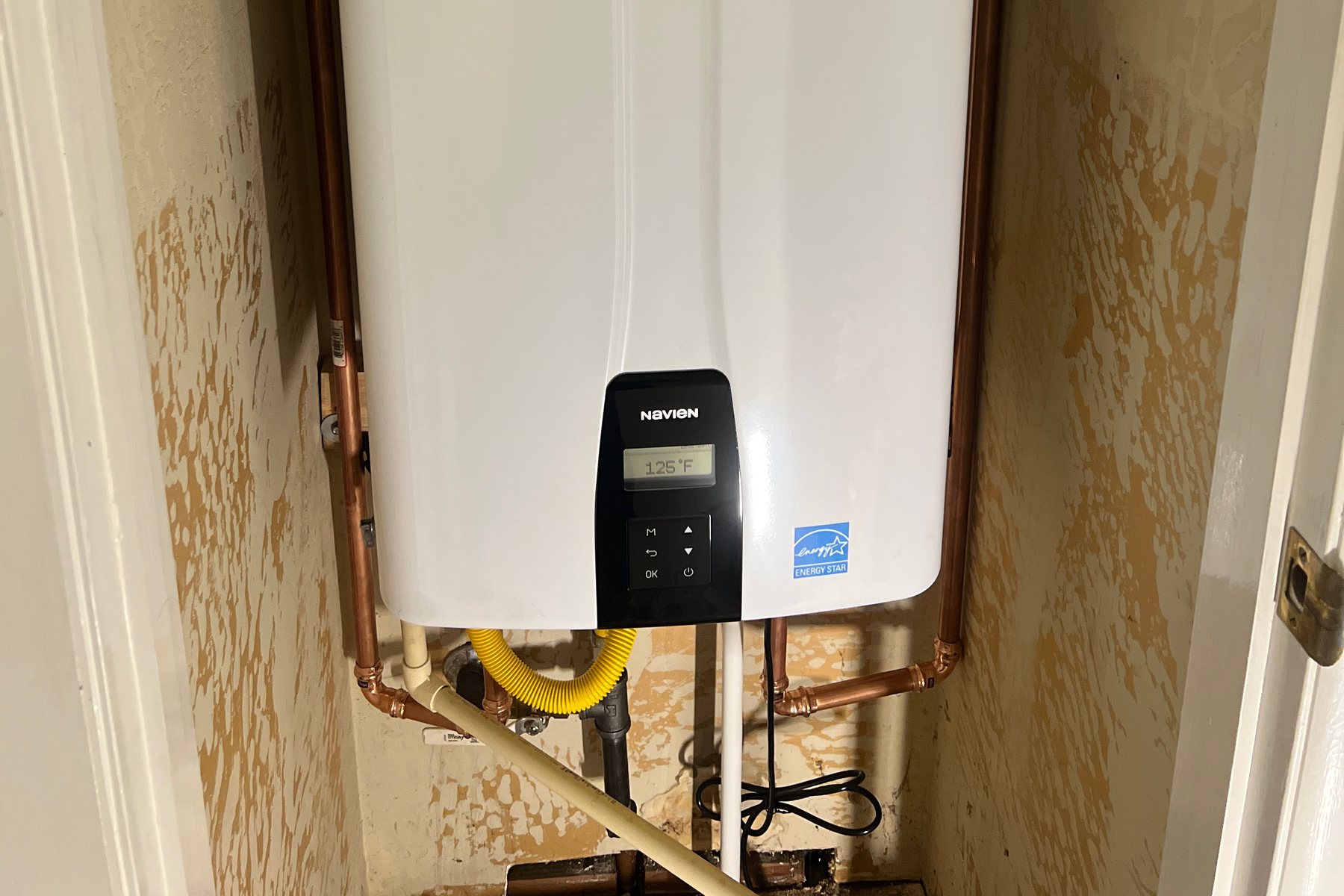
We upsized the last run to the unit to three-quarter inch, which was enough to clear the unit's rated draw without repiping the whole house back to the meter. That added about ninety minutes and a permit-covered inspection to the job, on top of the swap itself. We mounted the tankless unit, set the vent through the same wall penetration we'd planned for, tied the condensate into the existing floor drain, and left the homeowner with the actual gas line diagram we'd drawn on-site, not a generic one.
The unit is sized for the house now, not for the line that happened to already be there. That's the difference between a swap that holds for twenty years and one that starts throwing codes the first cold snap two showers overlap.
04Frequently asked questions
At peak demand a tankless unit can call for two to three times the gas a tank ever draws. A half-inch line that fed a forty-gallon tank for decades without issue can starve a tankless burner the first time two fixtures run hot water at once.
The undersized line only showed up once we opened the meter and traced it back in person. It's exactly why we walk the gas line before anyone commits to a number, rather than quoting from a phone call or a photo.
It shows up eventually as an error code and a cold shower, typically the first cold snap when two showers overlap, instead of during the estimate where it belongs.
No. We upsized just the last run to the unit to three-quarter inch, enough to clear the unit's rated draw without repiping back to the meter. That added about ninety minutes and a permit-covered inspection to the job.